A friend asked why there is no neon brown. It turns out that a better name for neon colors is "fluorescent". Fluorescent colors appear unnaturally bright because they are. They contain pigments which are made up of molecules which are very efficient at absorbing high frequency light and then emitting lower frequency light. For instance, some molecules absorb ultraviolet light and re-emit some fraction of it in the blue. This is the principle behind those detergents that make clothes look super-bright white. (It's also why printer paper sometimes look blindingly white.) Your eye expects that the brightest something can be, is if all the ambient (visible) light is reflected back, but by sneaking in extra energy from the UV, something can actually be brighter than it should be. (I admit to being surprised by the part about the brain sensing the amount of illumination something is getting and then formulating an expectation about how bright things should appear, in an absolute sense.) Obvious corollary: You can't display a seemingly fluorescent color on a computer screen without doing something clever like making everything else appear dimmer.
Much of this I got from
this page, which also explains that:
"Fluorescent blues are usually unimpressive because they must be fueled by farther-UV light, and there is not always an abundance of that in the ambient illumination. Red is typically fueled by green, yellow by blue, green by violet/near-UV. In a well-lit room you are guaranteed plenty of blue light, so fluorescent oranges have it made."
So, now we know why neon brown is so hard to come by - neon blue is too weak. But you could artificially create it (and neon purple), by illuminating a room with an appropriate wavelength black light. It would probably be easier to create neon tan. Neon beige, anyone? Don't get me started on neon grey.
What about gold and silver and copper (as in a box of Crayolas)?
This page relates Crayola's official policy on gold and copper. Cutting to the chase:
All Crayola crayons are made from paraffin wax, stearic acid and color pigment. To manufacture our crayons, the paraffin wax is melted and mixed together with pre-measured amounts of powder color pigments to produce the many colors of Crayola crayons.
The original formulation of Crayola copper and gold colored crayons contained bronze powder, which in the presence of stearic acid will oxidize over time, causing the green color. This oxidation process is the same as occurs on a penny or the "Statue of Liberty" as a result of an acidic environment. We successfully reformulated the copper and gold crayons to prevent oxidation from occurring by using a blend of pigments to achieve the copper and gold colors. This formula change took place during 1994 and continues today in both the copper and gold crayons.
The page goes on to refer to the
Wikipedia entry on the gold color*:
"Of course, the visual sensation usually associated with the metal gold is its metallic shine. This cannot be reproduced by a simple solid color, because the shiny effect is due to the material's reflective brightness varying with the surface's angle to the light source."
* (Some argue gold is not a color at all, but a combination of yellow and luster. They obviously never had a pre-1994 box of 64 Crayolas.)
But I think that this is a little pessimistic. Suppose you take the little camera that is build into the top of the laptop screen and use it to monitor the ambient lighting, and the position of the user's head (and their likely viewing angle). Then it would be entirely possible to adjust the brightness of different bits of the gold in real time to synthesize the glittering of real gold.
If you liked this explanation, and would like to see more,
send me your science questions. I will try to answer, and if the result is interesting enough, I'll post it. This offer is good until I get overwhelmed and take it down.

![[Two-Fisted Science]](https://lh3.googleusercontent.com/blogger_img_proxy/AEn0k_tJtAtocxC6Itw2nwosftXehaWrM1dW5776appqrSmkxaqbMds1lgQyjCUEF_emkW_ufdkvvpGjE9Fweqd6fcgJ7k6tz1wE02qi1nTG-XqY1EcTzuocd5iK302g0NpcLr31NG9KwWjZVwQ=s0-d) Two-Fisted Science by Jim Ottaviani is a comic book with many different stories, all featuring real scientists and mathematicians, including Einstein, Newton, Galileo, Leibniz, Bertrand Russell, Bethe, Pauli, Heisenberg, Bohr, Oppenheimer, and Feynman!
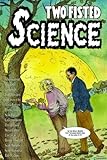
Two-Fisted Science by Jim Ottaviani is a comic book with many different stories, all featuring real scientists and mathematicians, including Einstein, Newton, Galileo, Leibniz, Bertrand Russell, Bethe, Pauli, Heisenberg, Bohr, Oppenheimer, and Feynman! 
